When the World Stops Sounding Human
What the Song "Heal the World" Still Reminds Us Of

Somewhere tonight, after a long day, someone sits in a parked car playing a song that is more than thirty years old. They have known the words since they were small. They have heard it at school assemblies, at funerals, in rooms where people did not know what to say. They reached for it tonight because the news has become too much, or because they have been hurting all week, or because the world has started to feel unrecognizable. They press play, and the same opening chords arrive, as they have for thirty years. And everything shifts.
When “Heal the World” was released in 1991 on Michael Jackson’s Dangerous album, the culture was already learning to be embarrassed by earnestness. The song has outlasted that embarrassment. It keeps surfacing in the same kinds of places it always has: vigils, memorial services, and school assemblies arranged by adults because they need to hear it too. After public tragedies, when no one knows what to say, people turn to this song. Some may not remember whose voice is singing. But they remember the chorus.
The song does something very few in public life are willing to do: speak tenderly, in plain language, about human worth. There is a children’s choir. There is a melody that sticks after only one listen. There is no irony, no qualification, no protective distance. The song asks the world to be gentle with the children in it. And it means it.
People do not usually return to songs like this because the world is simple. They return to them because modern life has begun to feel emotionally distorted. Despite constant conversation, public discourse often feels detached from humanity. Because systems become procedural. Because institutions manage optics better than they respond to suffering. Because people grow exhausted as cruelty becomes entertainment, polarization becomes identity, and vulnerability becomes something treated with suspicion rather than care.
And somewhere within all of that, certain songs give us a language that feels increasingly hard to find elsewhere.
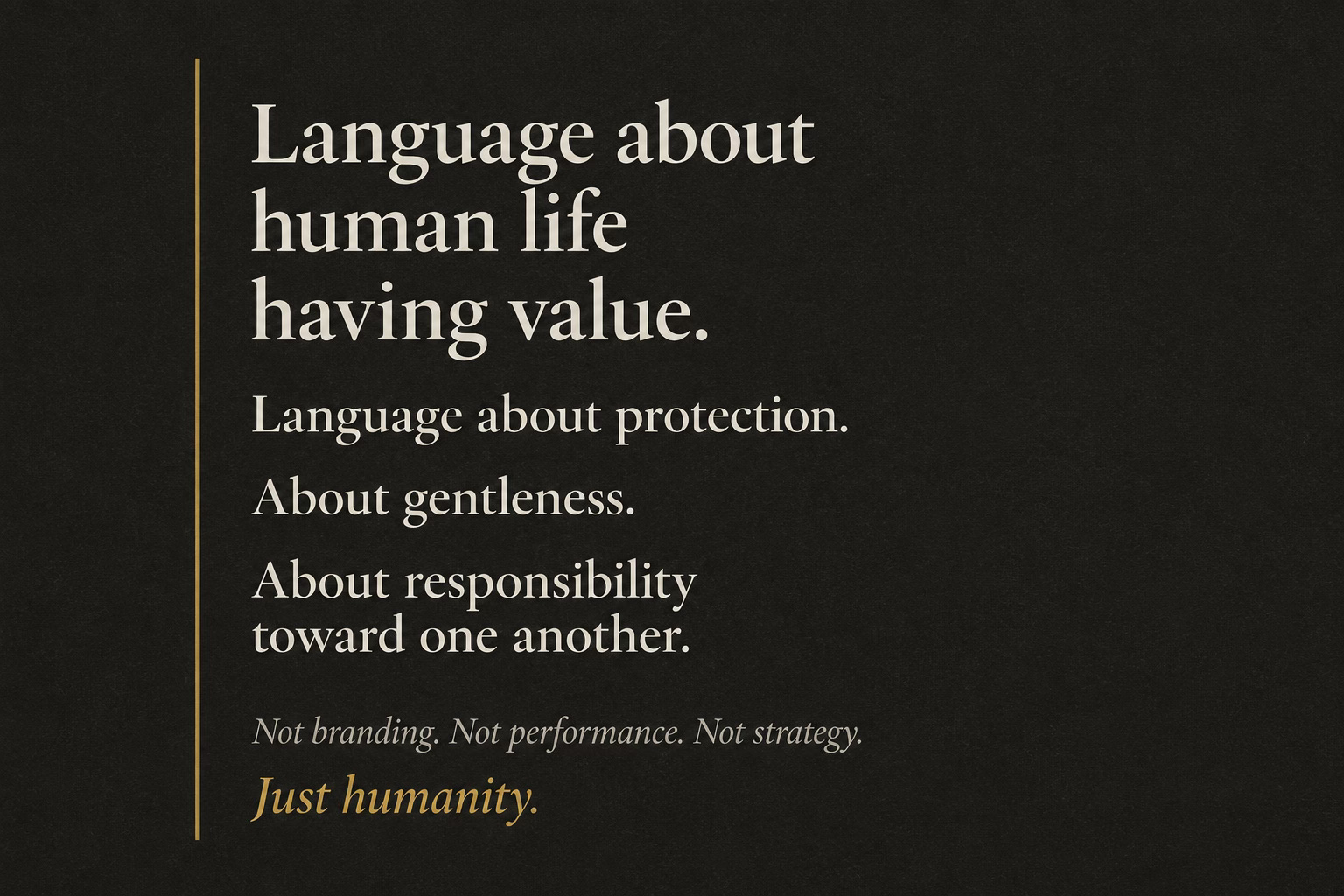
That may be why songs like “Heal the World” endure across generations, even in a culture that often dismisses sincerity as naïve. People are not searching for perfection when they reach for music like this. They are searching for recognition, for evidence that tenderness, grief, compassion, and collective care have not disappeared beneath the noise and institutional detachment.
Perhaps most importantly, they are searching for the person in all of it.
Finding the person is harder than it should be. Most stories arrive already flattened, with people reduced to a category, a faction, or a headline. What is missing is not information but an acknowledgment that the individual at the center is real. That they are loved by someone, afraid, tired, and hoping for better.
The song knows this, but most policy does not.
When the world stops sounding human, art often steps into the silence. Music cannot replace public policy. It cannot undo harm or resolve injustice. But it can quietly preserve emotional truths long enough for people to remember what should never have become difficult to say in the first place: human beings matter.
A reflection from Humanity Unmuted
Editor, Alyssa Kruse